Journey Design – from idea to holistic touchpoint architecture
Strategies only truly unfold their impact when they prove themselves in practice. This is exactly where Journey Design comes in: We create a thoughtful structure that meaningfully connects all touchpoints, processes, and roles — regardless of whether they involve customers, employees, or partners.
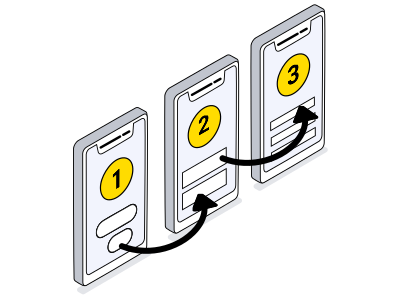
In this phase, the goal is to develop an actionable end-to-end architecture from the formulated ideas. The focus is on orchestration: How do touchpoints, channels, and internal workflows interact in a way that is both logical and user-oriented?
When structure and connection are missing
The challenge
What is usually missing is an overarching structure: a consistent journey that brings all elements together in a meaningful way. Without a clear structure, media breaks, unclear responsibilities, and implementation bottlenecks are the result.
A blueprint for seamless journeys
Our approach
In the Journey Design phase, we work with you to develop an operational blueprint: from the initial touchpoints through to processes, roles, and technical interfaces. We bring together insights from previous phases to design an architecture that is actionable, scalable, and compatible with your existing systems.
Ready-to-use structure for your teams
Your result
The developed journey architecture results in an operational blueprint that concretely brings together all relevant touchpoints, workflows, and responsibilities. The result is a practical, compatible structure that your teams can work with immediately — clearly defined, realistically actionable, and compatible with existing systems.
Ensuring consistent journeys via structured design, defined responsibilities, prototyping, and end-to-end monitoring.
Why good journey design makes the difference
Consistent and seamless user experience, independent from channel, target audience or use case.
Clear defined responsibilities, that make collaboration more efficient.
Faster implementation through practical, scalable architecture.
Reduced risk by building on real-world insights rather than assumptions.
Transparent steering thanks to clear KPIs and a robust monitoring concept.

)
)
)
)